
Share on                    

Opening Hours : 24 x 7
  Contact : Emergency: +91 8939 59 9999

All Posts in Category: Blog

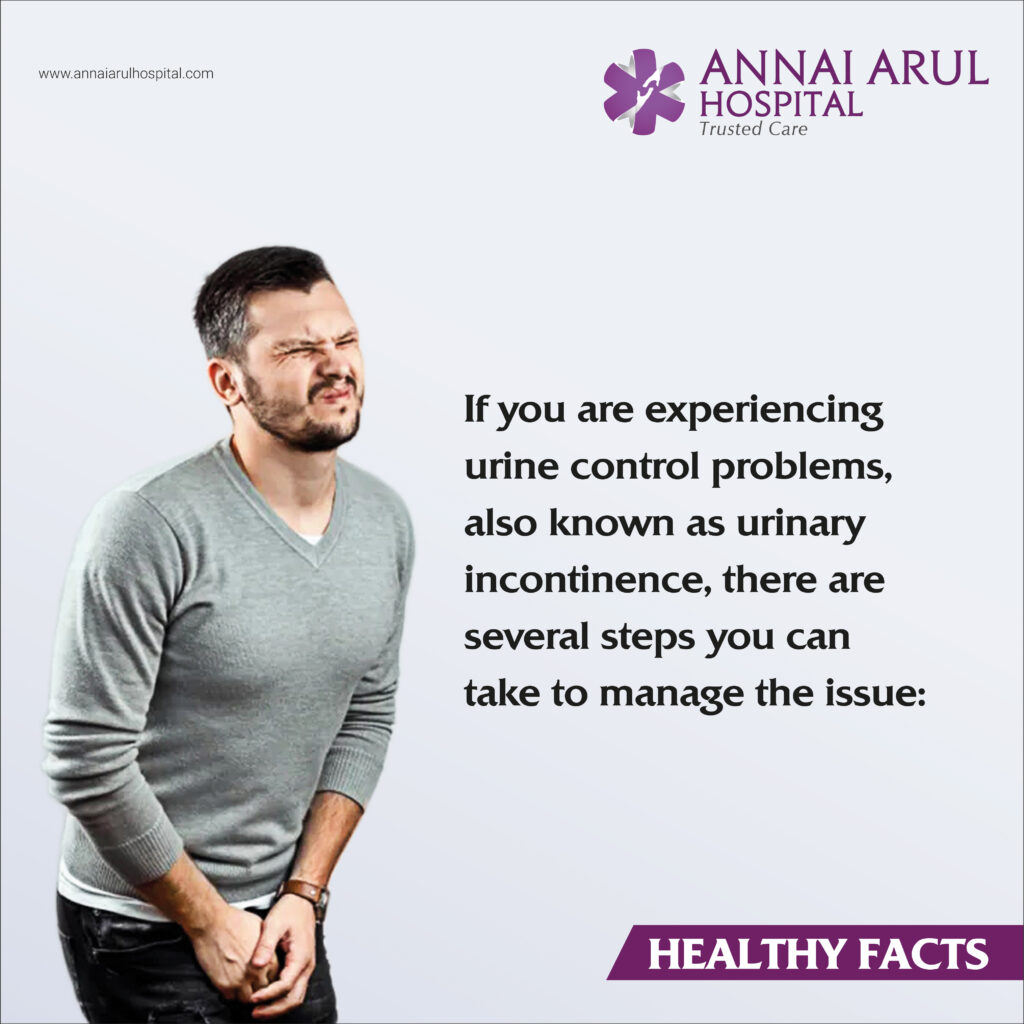
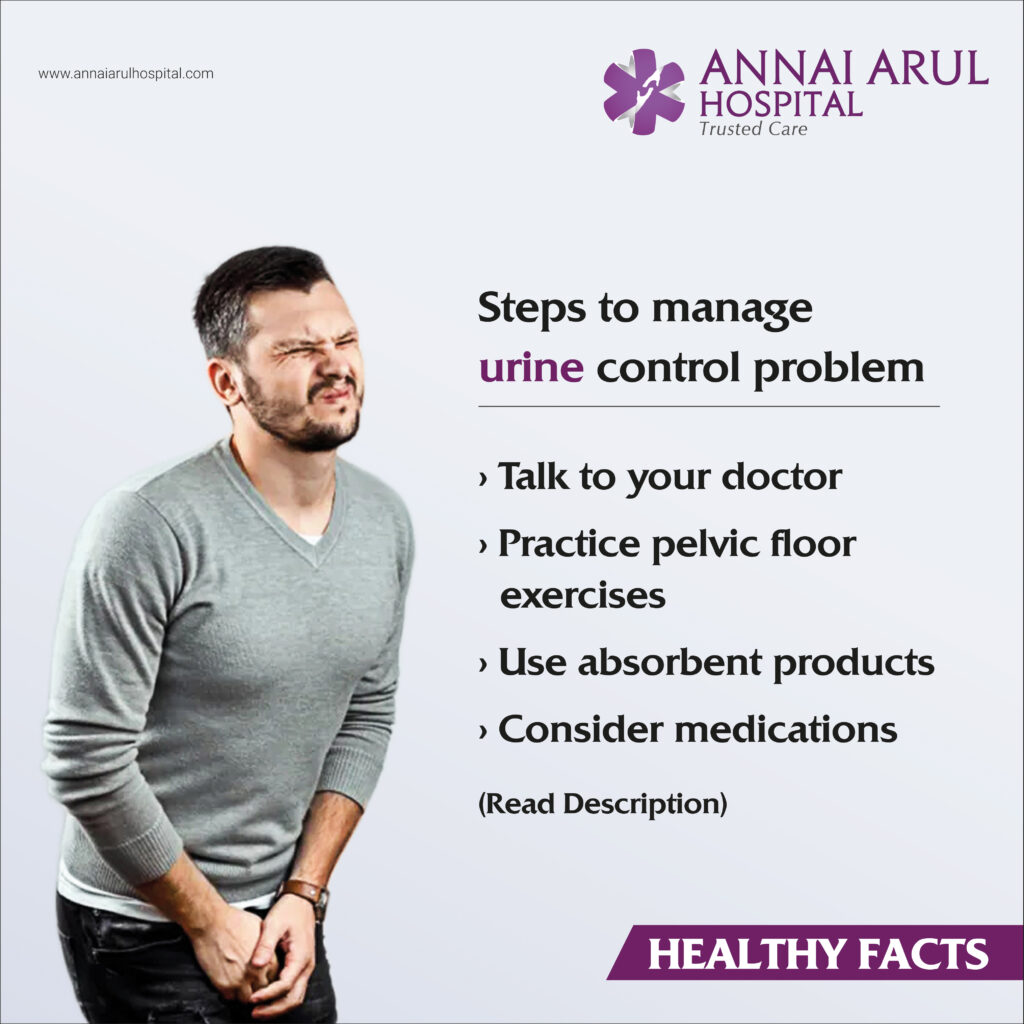
Are you experiencing a urine control problem?

DESCRIPTION
1. Talk to your doctor: The first step in managing urinary incontinence is to schedule an appointment with your doctor. They can assess your symptoms, rule out any underlying medical conditions, and recommend treatment options.
2. Practice pelvic floor exercises: Pelvic floor exercises, also known as Kegels, can help strengthen the muscles that control bladder function. Your doctor or a physical therapist can teach you how to perform these exercises correctly.
3. Make lifestyle changes: Making certain lifestyle changes can help manage urinary incontinence. These may include reducing your intake of caffeine and alcohol, losing weight if you are overweight, and quitting smoking.
4. Use absorbent products: There are a variety of absorbent products available, such as pads, diapers, and protective underwear that can help manage urine leaks.
5. Consider medications: Your doctor may recommend medications to help manage urinary incontinence. It’s important to remember that urinary incontinence is a common issue and there are treatment options available. Don’t hesitate to talk to your doctor and explore the options that are right for you.
#urologistcare
#departmentofurologyatannaiarulhospital
#annaiarulhospital
#tmultispecialtyhospital
#tophospitalsintambaramforurologycare


Read More

Ways to boost your Body’s Immunity

Ways to boost your body’s immunity

If you’re trying to boost your immune system, you may be wondering how you can help your body fight disease. It’s not easy to increase your immune system, but you can achieve it by making a variety of dietary and lifestyle adjustments that can strengthen your body’s natural defenses against viruses and disease-causing organisms.

1. Obtain adequate rest;
2. Eat more whole plant foods
3. Eat more healthy fats.
4. Take a probiotic supplement or eat more fermented foods.
5. Reduce the intake of additional sugars
6. Workout in a reasonable manner.
7. Keep hydrated.
8. Control your level of tension

Read More

Persistent Pain

  • Do you have persistent pain?
  • Do you have persistent pain that doesn’t go away with rest or
    over-the-counter pain medication?
  • It may be time to see a physiotherapist.
  • They can help identify the source of the pain and develop a
    treatment plan to address it.
  • Visit Physiotherapist at Annai Arul Hospital

#physiotherapist
#overthecounterpain
#persistentpain
#annaiarulhospital
#multispecialtyhospitalintambaram

Read More

Kidney Stones Signs & Symptoms

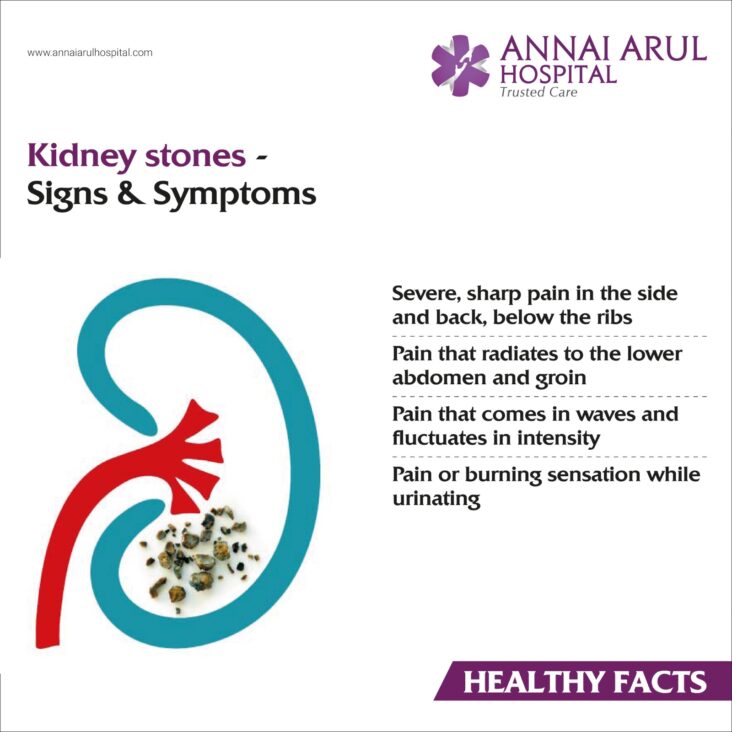
Kidney stones – Signs & Symptoms

Kidney stones are hard deposits consisting of minerals and salts that develop inside your kidneys. They are also known as renal calculi, nephrolithiasis, or urolithiasis.

Kidney stones are painful and can cause discomfort, so it is important to understand the causes and take steps to prevent them. Maintaining a healthy diet and weight can help, as can stay hydrated and avoiding medications and supplements that can contribute to stone formation.

● Severe, sharp pain in the side and back, below the ribs
● Pain that radiates to the lower abdomen and groin
● Pain that comes in waves and fluctuates in intensity
● Pain or burning sensation while urinating

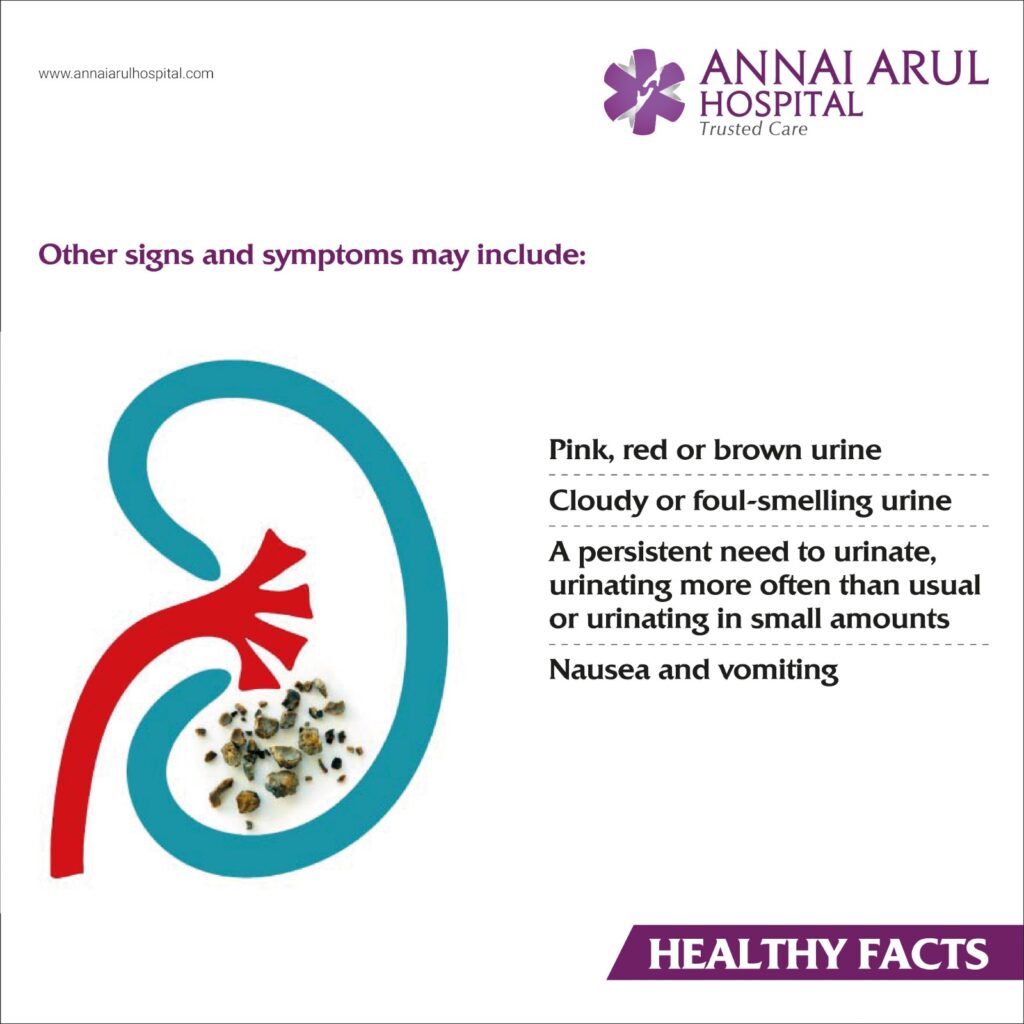
Other signs and symptoms may include:

● Nausea and vomiting
● Pink, red or brown urine
● Cloudy or foul-smelling urine
● A persistent need to urinate, urinating more often than usual or urinating in small amounts

Read More