Share on                    

Opening Hours : 24 x 7
  Contact : Emergency: +91 8939 59 9999

International Nurses Day

On 12th May 2018, International Nurses Day was celebrated at Annai Arul Hospital along with the hospital Medical Director Dr. S. Joseph Jensingh Babu, consultants and all other employees. The celebration was colourful with loads of fun entertained with music and dance followed by cake cutting. Nurses recited the pledge to be devoted to service and to the high ideals of the nursing profession.

Read More

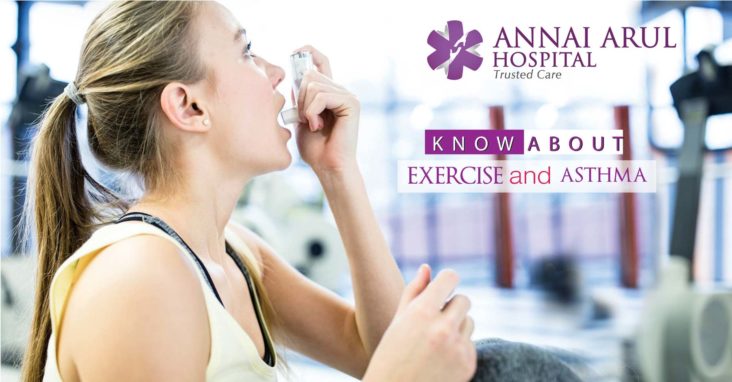
KNOW ABOUT EXERCISE AND ASTHMA

Asthma treatment is basically a way to help a patient lead a normal and healthy lifestyle instead of suffering from the effects of the disease. This is done by undertaking a regime of exercise and other physical activities,regular medications, avoiding allergic triggers and monitoring lung function etc. If the asthma symptoms do not allow you to fully participate in physical activities then you may need a small change in the asthma action plan. This will provide the required asthma relief during any exercise or activity.

THE MOST SUITABLE EXERCISES FOR ASTHMA

The exercise plan for an asthma patient can involve short, intermittent periods of exertion by taking activities like volleyball, gymnastics, baseball, and wrestling. These activities are found to be fairly well tolerated by asthma patients.

Activities that require long periods of exertion like distance running, basketball or field hockey may not be so well tolerated. Similarly sports in cold weather like skating, ice-hockey etc may pose serious problems. Though swimming which is an endurance sport is well tolerated by many asthma patients. This is because it is performed while breathing warm moist air and it is a good physical fitness activity. Other activities like cycling, aerobics, walking, running on treadmill are also beneficial for people with asthma.

HOW TO CONTROL ASTHMA DURING AN ACTIVITY?

First and foremost consult your doctor and chalk out an action plan for your activity or exercise and then only indulge in it.
Take care to use the pre exercise asthma medicine like bronchodilators if it is required into the action plan.

Do the necessary warm ups and cool down before and after the exercise

In cold weather wear a mask or scarf over the mouth and nose or exercise indoors

If prone to allergies do not exercise outside when the pollution count is high

Restrict exercise when there is an attack of cold or some infection

Keep the exercise well within the levels already planned

An active life ensures mental and physical health and asthma need not come in the way of a healthy lifestyle.

WHAT IF THERE IS AN ASTHMA ATTACK DURING ACTIVITY?

If there is a sudden appearance of asthma symptoms during exercise, then immediately stop and follow the instructions as given in the action plan. It is safe to keep the inhaler handy and use it as instructed by your physician. If you still feel the symptoms are not stopping then reach for the nearest medical centre or hospital.

Read More

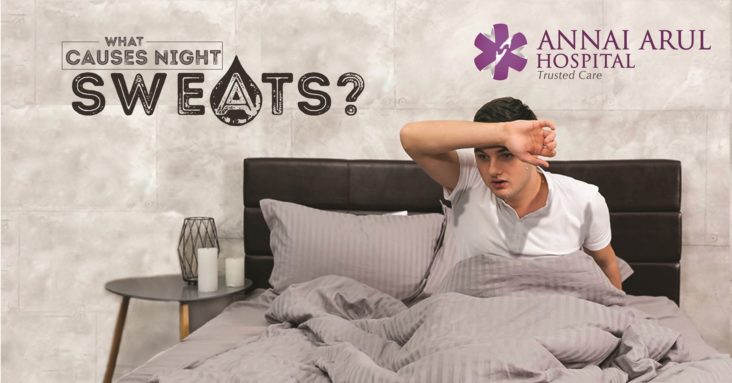
WHAT CAUSES NIGHT SWEATS?

When there is excess sweating during night and your sleep gets disturbed due to it, then it’s called a night sweating. Better be sure that you are not sleeping in a bedroom that is unusually hot or you are not wearing too many bedclothes, since they also cause you to sweat. Whereas true night sweats are hot flashes occurring during night that drenches the clothes and sheets and not related to an overheated environment or thick layer of clothing.

There are umpteen reasons for a night sweat and the doctor will have to study the health history in detail to come to a conclusion or find a relevant cause. Sometimes proper tests are done to decide if you have any underlying health conditions that are causing the night sweat.

Here are few of the more common reasons for a night sweat:

MENOPAUSE

Women undergoing the menopause stage in life will experience hot flashes during their sleep and this will cause the night sweat. This is a very common cause of night sweat.

INFECTIONS

Conditions like tuberculosis infection is a common reason associated with night sweats. Sometime bacterial infections like endocarditis which causes inflammation of the heart valves, osteomyelitis (bone inflammation) and abscesses can be the reason for night sweats. Those affected with HIV will also experience night sweats.

CANCER

Many medical researchers infer that a person suffering from cancer can experience night sweating. The most common of them all is Lymphoma which is sure to cause night sweats. People with undiagnosed cancer will also have other symptoms like unexplained weight loss and fever.

HYPOGLYCEMIA

Those with low blood sugar can also suffer from night sweats. Patients taking insulin or oral diabetes medications may at times get hypoglycaemic at night and this will be accompanied by severe night sweating.

HORMONE DISORDER

A person suffering from hormone disorder including carcinoid syndrome and hyperthyroidism. Sweating or flushing is a common occurrence for such people.

NEUROLOGICAL CONDITION

Health conditions like autonomic dysreflexia, posttraumatic synriongomygelia, stroke and autonomic neuoropathy can cause increased sweating and this will continue in to the night to give night sweats.

Some other reasons for night sweat include medications and diseases affecting the sweat glands.

Read More

WHAT TO DO WHEN YOU HAVE LOW BLOOD SUGAR?

When the body does not have enough sugar to use then the person with diabetes gets hypoglycaemia or low blood sugar. This can happen due to particular diet, excessive exercising or some medicines. It is better to consult the doctor with information about the date and time of low blood sugar to manage the condition.

What are the symptoms of low blood sugar?

A person feels the symptoms of hypoglycaemia or low blood sugar when the sugar level in the blood falls to 70 mg/dl or lower. The symptoms in diabetic patients are different. The early symptoms of hypoglycaemia include confusion, dizziness, feeling shaky, hunger, headache, irritability, a pounding heart, racing pulse, pale skin, sweating, trembling, weakness and anxiety.

The severe conditions include:

Poor body coordination

Poor concentration

A numb feeling in the mouth and tongue

Becoming unconscious

Seizures

Sudden nightmares and bad dreams

Coma

Medications can cause hypoglycemia

Some medications can also cause hypoglycaemia. Diabetic medications  commonly used sulfonylurea’s like Am aryl, Glucotrol and Micronase and can at times cause hypoglycaemia. It is seen that some of the older sulfonylureas causes low blood sugar rather than the newer ones.

Similarly the type of insulin and its dosage can also be a reason for sudden hypoglycaemia. All the medications including insulin have to be taken strictly under medical supervision and adjusted according to individual needs by the doctor alone.

One does not get hypoglycaemic if alpha- glycosidase inhibitors like Metformin are used but if they are taken along with sulfonylureas or insulin then hypoglycaemia can happen.

Diet and hypoglycemia

A proper diet is most important for management of sugar levels and it can get upset if you take too much of insulin or medication whereas as you don’t match it with the amount of carbohydrates you eat or drink.

It can happen when you eat a meal that has lot of simple sugars or if you miss a snack or when you don’t eat a full meal and that too on time. If you drink alcohol without eating enough food then too you can get low blood sugar symptoms. Do not skip timely and enough quantity of food or meals when you are taking diabetic medications.

How to prevent hypoglycaemia?

These are the steps that will help to prevent hypoglycaemic conditions to a large extent:

  • Follow a proper meal plan
  • Eat at least 3 evenly spaced meals with in-between snacks as prescribed
  • Each meal should be 4-5 hours apart
  • Exercise for 30 to 1 hour only after meals
  • Check blood sugar before and after the exercise and let your doctor know about it
  • Take care to double check your dose of insulin and medication before you take it
  • Drin alcohol in moderation with proper food
  • Monitor your blood sugar regularly and let your doctor know about any change
  • Carry some identification of having diabetes or info about it so that you may get help during an emergency
Read More

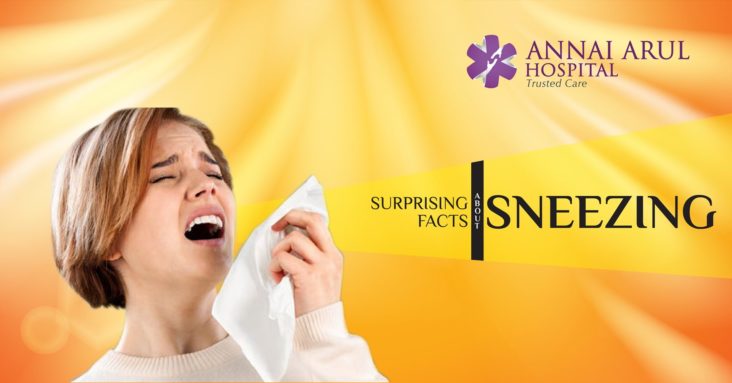
SURPRISING FACTS ABOUT SNEEZING

There are many factors that induce a sneeze and it may not be the same for two people in the same family. Some people sneeze as they come out of their home on a sunny day, while others get a sneeze when they pop a chewing gum into their mouth. Many people have a fickle nose and start sneezing at the smallest excuse like after an exercise, when plucking the eyebrow or eve after sex.

Here is a glimpse at why these people sneeze at such times and all about why we sneeze at all.

Sneezes start in the nerves

All our nervous system is basically wired in the same way, but signals travelling along the nerves take various paths to and from the brain and thus the different situations in which a person sneezes and others don’t. It is actually a result of a nerve transmission that tells the brain that something is in the nose and needs to come out.

Sneezing keeps the body safe

Sneezing is a vital part of the immune process, helping us keep healthy and free from infections.  A sneeze actually clears the nose of bacteria and viruses and thus protects the body. What happens is, when some foreign body enters our nose it triggers off the ‘sneeze centre’ in our brain, which is located in the lower brain stem. Thereafter signals are rapidly sent to tightly close the throat, eyes and mouth. The chest muscles rapidly close and the throat muscles quickly relax. Instantly air along with saliva and mucus is forced out of the mouth and nose and so finally you have sneezed.

Sneeze has high speed

You will be surprised to know that a sneeze actually travels at about 100 miles per hour. It is estimated that a single sneeze can shoot into the air 100,000 germs.

Plucking eyebrows causes a sneeze

When you pluck your eyebrows a particular nerve in the face that supplies the nasal passage is set off and produces a sneeze.

People don’t sneeze in sleep

People in deep sleep never sneeze, since the sneeze inducing nerves are not stimulated and go to sleep and so there is no sneeze during your sleep.

Exercise makes one sneeze

For some people an exercise session may bring on a sneeze. When a person hyperventilate due to exertion the nose and mouth start to dry up, the nose then starts dripping and this makes you sneeze.

Sunshine makes one sneeze

One out of three people get a sneeze as bright sunlight hits them. These kind of sneezers are called light sneezers or ‘photics’, from Greek for ‘of light’. Light sensitivity is an inherited trait and it is passed on from our parents.

How can you stop a sneeze?

While it may not entirely be a fool-proof solution, breathing through the nose and pinching the end of the nose can stop a sneeze in its tracks.


Read More