

Share on                    

Opening Hours : 24 x 7
  Contact : Emergency: +91 8939 59 9999

All posts by admin

Know All About Ear Infections

Usually a cold, throat infection or allergic  attack can cause fluids to become trapped in the middle ear. This mostly affects children and the symptoms may include severe pain in the ear or earache and thick yellow fluid coming out of the ears. This sort of condition is called as an ear infection.

What causes ear infection?

The middle ear is a small space that is positioned just behind the ear drum and it is supposed to be well ventilated by the air that passes through the Eustachian tube. When there is not enough fresh air ventilating the middle ear due to fluid retention there, then the Eustachian tube gets clogged, becomes damp, stagnant and warm, which is a good breeding ground for germs. This leads to ear infection.

Symptoms of ear infection

The symptoms may slightly differ in adults and children. The symptoms in adults include earache, drainage from the ear, and feeling of fullness in the ear, muffled hearing, and nausea.

In children the symptoms will be a tugging feeling in the ear, poor sleep, fever, ear drainage, irritability and restlessness, lack of appetite and crying when lying down.

How to prevent ear infection?

Ear infections tend to occur mostly in cold and damp weather like winter and rainy season. It is more common in children due to various possibilities of them catching it easily.

Here are a few tips to prevent ear infection in babies and children.

  • Babies who nurse should be breastfed or bottle-fed in an upright position, since it prevents fluids from entering their ear
  • Try to prevent exposing a baby to cigarette smoke and other air pollution
  • Give your child  immunization shots at the right time indicated
  • Babies above 12 months should be weaned away from baby pacifiers, since pacifiers can cause ear infections in children
  • Clean the child’s hand and our own hand often with soap and water. This reduces the spread of germs and our child from catching the flu or cold.
  • Try as far as possible to keep dirty objects away from a baby’s reach to prevent it from putting in the mouth and causing ear infection.

The Treatment

Ear infections in adults and children are treated with antibiotics. If the doctor suspects that the ear infection is caused due to a virus then an antibiotic may be ineffective and alternate treatment is given but if it is from bacteria then an antibiotic is prescribed as the main medication.

Read More

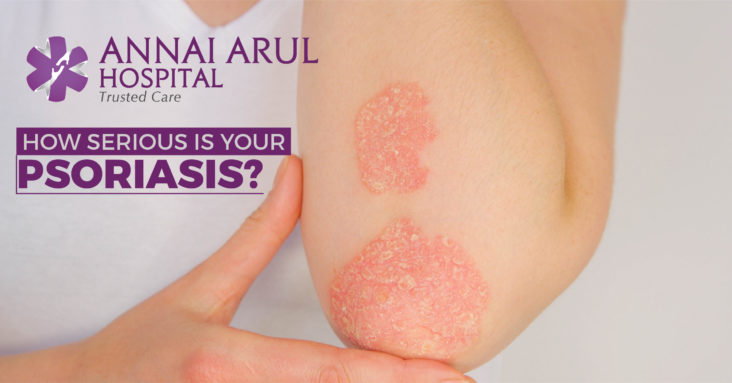
How Serious Is Your Psoriasis?

Psoriasis is usually graded based on the area of skin it covers. Doctors also classify it based on how red, scaly and thick the patches are. Other criteria for grading is the extent of damage it does to the quality of your life. Yet some other scales grade psoriasis into two, either mild or moderate to severe.Based on severity, psoriasis can be mild, moderate or severe.  Based on morphology,  the most common type are plaque type, erythrodermic, rupoid, psoriasis, guttate psoriasis, pustular psoriasis.

Based on sites:

Mild Psoriasis

This is the most common type of psoriasis clinically encountered. The mild cases affect less than 3% of the body surface. There are also few lesions scattered on the arms and legs. The scalp is another area that shows fine, silvery scales. This type of psoriasis is mainly treated with topical drugs like creams or ointments.

Moderate Psoriasis

Psoriasis attains the moderate degree when patches cover 3% to 10% of the body area. Once moderate psoriasis spreads, creams and lotions have no effect instead you may need phototherapy or light therapy in combination with prescription drugs. This type of psoriasis can affect the quality of your life to a great extent.

Severe Psoriasis

If the psoriasis infliction covers 10% or more of your skin then you are said to suffer from the more severe type of psoriasis. Here size of the patches does not matter since smaller patches in places like the palms and soles of your feet can be more severe. The treatment in such cases will include biological drugs and other systemic therapy that work on the whole body rather than only the skin. Based on sites affected psoriasis can be clasiified as scarp psoriasis, sebo psoriasis, nail psoriasis, flexual psoriasis, palmoplantar psoriasis.

Erythrodermic Psoriasis

This type of psoriasis occurs in less than 3% of people and is characterised by scales and blisters called pustules that cover almost 90% of the body surface. The skin tends to peel off in large, red sheets. The lesions due to skin peeling off is much painful and very itchy. This type can be deadly and need immediate medical care.

Another type, called pustular psoriasis starts with large areas of the skin turning red and the surface getting filled with pus in quick time.

Psoriasis impacts life

Psoriasis is not only physical disease, but it has a significant impact on your self-esteem and the way you do day-to-day chores. Hence the importance of quality of life in a doctor’s diagnosis. The experts use Dermatology Life Quality Index along with PASI (Psoriasis Area ).

Read More

What Do You Know About Nerve Pain ?

People experience nerve pain in different ways. Sometimes it’s a stabbing pain in the middle of the night, or a chronic prickling, tingling, or burning they feel all day. Uncontrolled nerve pain can be debilitating and hard to bear, but with treatment, it can often be adequately controlled.

When you take your hand close to a flame from a campfire, the nerves send out a pain signal to the brain and you immediately withdraw your hand before you burn yourself. Pain is actually supposed to be a warning. If you have nerve damage, the system isn’t working, so damaged nerves send false signals to the brain and you feel real pain, even without any cause. Damaged nerves may also send no signals and you feel no pain even when you are injured.

Nerve Pain Triggers

Certain body positions or certain activities like standing in a queue or walking suddenly becomes painful. Nerve damage also makes the body over sensitive, this means you may experience pain even when a bed sheet is draped lightly around your body.

Loss of feeling

Nerve damage at times may cause loss of sensations and a feeling of numbness in the fingertips,  affecting the use of your hands. Knitting, typing and tying shoes may become difficult. People with nerve damage usually say that their sense of touch is dulled and they feel as if they are wearing gloves all the time.

Effects of pain and sleep

Nerve pain usually is seen to get worse at night. With the touch of sheets or with the pressure of lying down, the pain gets aggravated and the person gets terribly uncomfortable. The patient loses sleep because of the nerve pain, this should be mentioned to a doctor. With modified lifestyle and medicines this state can change.

Loss of balance

Nerve damage not only causes numbness in the hands and feet but also causes muscle weakness. This results in the loss of balance when walking. Such a condition also may lead to falls. The person has to use devices like braces, canes or walking stick for assistance. Some physical and occupational therapy can help.

Unseen Injuries

The numbness caused by nerve damage will prevent the person from feeling any pain. The person may get injured without realizing it. It is best to check yourself for injuries from time to time, especially in the feet.

Nerve pain getting severe

Nerve pain when left untreated will worsen over time. It first starts in the nerves farthest from the brain and spinal cord, like in the feet and hands. Then it moves up along the legs and arms. Usually when treatment is given for the condition that is causing the nerve damage, then the nerve pain stops and the damage gets even reversed.

What causes nerve pain?

Conditions like diabetes, shingles and cancer can cause injury to the nerves leading to pain. Sometimes nerve pain occurs without any reason. It is best to detect and treat underlying cause of nerve pain like uncontrolled diabetes and treat it appropriately.

Read More

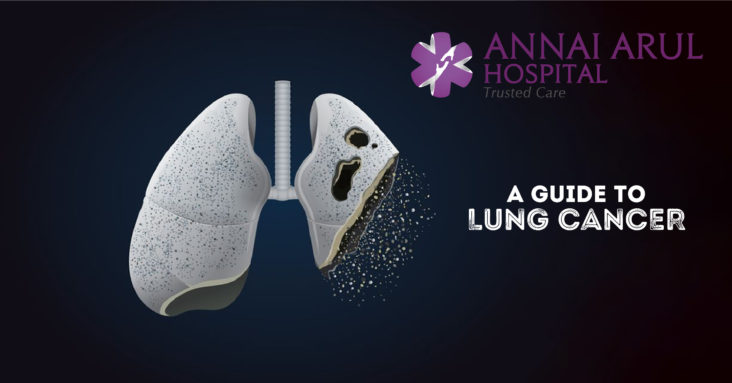
A Guide to Lung Cancer

A major cause of cancer deaths in the recent times is attributed to lung cancer. This is so in both men and women. It was with the introduction of mechanical cigarette rollers, that an increase in lung cancer was observed. So it is clear that smoking is the leading cause for lung cancer.  Dangerous gases, pollution and other causes have a smaller role when compared to smoking.

What does smoking do?

Each cigarette is packed with deadly cancer causing chemicals. The human airways are lined with tiny hairs called cilia. The toxins, bacteria and viruses that try to enter the air passage is swept away by the cilia and expelled. Smoking actually inhibits the cilia from carrying out its function, this lets the cancer causing harmful substance into the air passage and finally the lungs thus causing cancer.

Symptoms of lung cancer

When lung cancer begins it does not usually cause any symptoms or warning signs. But as the cancer gets worse more and more symptoms appear. The symptoms can be anything from a persistent cough to chest pain during breathing, wheezing or shortness of breath, blood in the phlegm and constant fatigue.

How is it diagnosed?

Complaint of a long lasting cough or wheezing will make your doctor examine further by asking for a chest X-ray or advanced imaging test depending on the seriousness of the case. A sputum test also is advised along with few specialised blood tests. Based on the result of these tests the doctor will be able to find out if you are suffering from cancer. To confirm the same there may be a need to do a detailed biopsy.

What are the types of lung cancer?

There are mainly two type of lung cancer, the small-cell lung cancer and the non-small cell lung cancer. The non-cell lung cancer is the one that progresses slowly and which is more common. The small-cell lung cancer is more aggressive and spreads quickly to other parts of the body at a very early stage itself. The small-cell lung cancer is mainly caused due to cigarette smoking and mostly does not affect non-smokers.

What is the early treatment?

For any type of cancer, early detection gives some hope for cure. Similarly when doctors find non-small-cell lung cancer at an early stage that is before it spreads from one lung to the other they suggest an operation to contain the cancer.  A part of the lung or depending on the severity the entire lung itself is removed. A course of radiation or chemotherapy is given to destroy any remaining cancer cells. In the case of small-cell lung cancer, surgery does not help because it would have already spread to the other lung and body organs.

What are the other risks?

Apart from smoking, pollution and dangerous gases like radon some other causes can also lead to lung cancer. They include a family history of lung cancer or drinking water with high arsenic content in it. Lung cancer is seen to affect women more than men and also many times non-smokers.

How to prevent lung cancer?

We can conclude that avoiding smoking or inhaling smoke from other people can to a great extent help prevent lung cancer. It is always better to quit smoking before any signs of cancer appears. Try avoiding pollution and exposure to dangerous gases during daily travel and at workplace which can also protect you from cancer.

Read More

Arachnoiditis and Pain Management

A pain disorder caused by the inflammation of the arachnoid, a membrane that surrounds and protects the nerves of the spinal cord is known as arachnoiditis. It is characterised by severe pain with a stinging and burning sensation along with neurological problems.

Symptoms of arachnoiditis

There seems to be no consistent symptoms, but many people suffer from pain in the lower back and legs. The main symptom is pain but the disease many lead to other symptoms also like tingling, numbness or weakness in the legs.

There may be sensations like insects crawling on the skin or water tickling down the body. It many also cause shooting pain like an electric shock, muscle cramps, spasms, bladder, bowel and sexual problems.

As the disease progresses the symptoms become severe and even remain permanent. The disease may even make people unable to work due to significant disability and constant pain.

Causes of arachnoiditis

When the spinal nerves stick to one another and malfunction due to scar tissue formation as a result of inflammation then it causes arachnoiditis.

The arachnoid can get inflamed due to some sort of irritation due to direct injury to the spine, some chemicals used in radiography, some steroid medications, infections like fungal meningitis, tuberculosis which affect the spine and chronic compression of spinal nerves due to degenerative disease or narrowing of spinal column.

It can also be a result of an invasive surgery of the spinal column.

Diagnosis for arachnoiditis

Tests such as CAT scan or MRI is used for diagnosis. Another test called electromyogram (EMG) can assess the severity of the damage to the nerve roots. Myelograms with radiographic contrast are currently used for pinpointing the disease.

What are the available treatments?

Arachnoiditis is not exactly curable. The treatment options include management of pain like in other chronic pain conditions. This helps in relieving the pain and improving symptoms that impair the daily activities. Doctors recommend a mix of pain management techniques, physiotherapy, exercise and psychotherapy. Surgery outcomes are poor for arachnoiditis and at best provide only temporary relief. Other options are sterioid injections and electrical stimulation.

Read More