
Share on                    

Opening Hours : 24 x 7
  Contact : Emergency: +91 8939 59 9999

All posts by admin

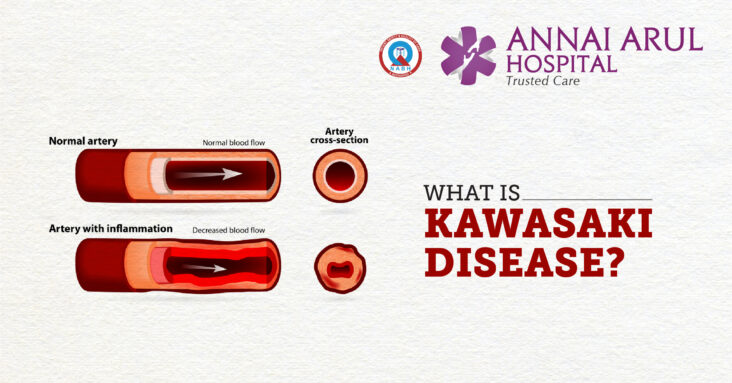
WHAT IS KAWASAKI DISEASE?

WHAT IS KAWASAKI DISEASE?

Kawasaki disease is a disease that causes the blood vessels to get inflamed. It is a disease mostly affecting younger children. It is also a leading cause of heart disease in children. The only relief is that it is treatable if detected early and most children recover without any complications.

Causes and risk factors

Inflammations caused by Kawasaki disease can harm the child’s coronary arteries that carry blood to the heart. It also causes damage to lymph nodes, skin and lining of the mouth, nose and throat.

The exact cause for Kawasaki disease is not yet found out but it may be linked to genetics, viruses, bacteria or some sort of chemicals or triggers like irritants. It is not contagious but it affects pockets of a community and is widespread during winter and spring seasons.

Other factorsss causing the disease may be young age, gender (boys are more likely to get the disease) and ethnicity (Asian descent).

Symptoms of Kawasaki

The disease mostly has an acute appearance and symptoms are seen in phases. The phases include:

  • I High fever that lasts more than 5 days with no effect even after medication
  • I A peeling skin or rashes on the chest, legs and genitals or groin area
  • I Swelling with redness on the hands and bottom of the feet
  • I Unusual redness of the eyes
  • I Swollen lymph nodes in the neck
  • I Throat, mouth and lips have irritation
  • I Pinkish red tongue colour

AS the disease progresses to the second phase, symptoms include joint pain, belly pain, diarhhoea, vomitting and peeling skin on th hands and feet. Kawasaki disease causes heart problems 10 days to two weeks after the symptoms appear.  Then symptoms will start decreasing in the third phase, which can last upto eight weeks.

Diagnosis of Kawasaki

The disease is diagnosed through EKG (electrocardiogram) or ECG (echocardiogram), blood tests and various advanced imaging.

Treatment for Kawasaki 

Usually, the child suffers from excess pain, fever, swelling and skin problems. The doctor will prescribe aspirin and drugs to prevent blood clots. Some immune globulin is  administered. This contains antibodies that help fight any infection.

Complications of Kawasaki

Since the disease causes heart ailments in children, it is a bit scary. Most children do recover from the illness without any problems. In some cases, complications can arise and include:

  • Unusual heart rhythms (dysrhythmia)
  • Inflamed heart muscles (myocarditis)
  • Damaged heart valves (mitral regurgitation)
  • Inflammed blood vessel (vasculitis)

All these heart problems can cause other troubles, too, including weak or bulging artery walls called aneurysms. This raises the risk of artery blockages, leading to internal bleeding and heart attacks. An echocardiogram is used to detect these abnormalities.

In severe cases, children may need surgery; in fact infants are at higher risk of serious complications.

————————————–

Read More

WHAT TO FEED BABIES IN THEIR YEAR 1

WHAT TO FEED BABIES IN THEIR YEAR 1

At year 1 your baby is just learning to eat on his/her own. They can chew the food as well as you can, which means they can eat the same foods as the rest of the family. Solid food including healthy snacks are your child’s source of energy and nutrition.

You can still continue breastfeeding the baby as much as the child wants. Take care to avoid giving the baby junk foods and soft drinks.

Here is a look at the progression of diet for the baby till year 1.

Start solids at 6 months

This is the accepted period for introducing solid foods to the baby. Before innntroducing solids, its mandatory that your baby should be able to sit up (with support), turn the head away and chew the food. He should also have given up the reflex that makes him spit out anything that goes into the mouth.

Add to breast milk

Usually, babies will not eat a lot of solid foods right away. So we should think of solids as something we add to the baby’s diet. It will not be a replacement for breast milk though. We just introduce solids and not change the baby’s diet entirely or eliminate milk. The change should happen gradually.

Why start with rice cereal?

There is no rules as such that you should start your baby on a particular solid food. You can also avoid cereals completely. But, if you feel comfortable with cereals, then start on a single-grain, iron-fortified infant cereal with a neutral flavour. You can mix it with the formula or milk to get a running consistency. Then you can gradually thicken it, so the baby takes to it.

Start on fruits and vegetables

Your baby’s solids can include fruits, vegetables, grains and even pureed meats. Take care to introduce any of these one at a time. This is to observe how the baby reacts to the flavours and if it causes any allergies. The baby may not eat them at first, but keep trying. Use softened or pureed food and put enough on the spoon for the baby to swallow easily. Don’t try to force-feed when the baby refuses  to eat, take it slow and your baby will soon start eating solid food.

Cut out milk and honey

According to paediatricians, you should wait till your baby’s first birthday to offer cow’s milk. Since it can not compare to mother’s milk or have the nutritional value of some other formulas. Best not give honey too since it can cause botulism in babies whose immune system cannot fend it off.

Stop when baby stops

Your baby has a way of telling you when its done eating. The baby will swat at the spoon, turn the head away, zip its lips or spit the contents from its mouth, and finally the baby will cry too. Don’t try to force-feed since the baby knows when it’s full. Honouring their instincts will help the baby avoid overeating as they grow older.

Try some finger foods

At about 9 months, the baby will be able to reach for and pick-up small pieces of table food to eat. Some great finger foods for the baby include ripe banana pieces, cooked carrots, cottage cheese, cooked pasta, cereals and scrambled eggs. Avoid placing hard candy, chips, raw vegetables, dry fruits, hard cheese and sausages etc.   near the child.

======================

Read More

TIPS TO BRIGHTEN YOUR TEETH AT HOME

TIPS TO BRIGHTEN YOUR TEETH AT HOME

Today, it is much easier to find the right health solutions, brightening your teeth at home is one of the most popular ones. There are online products and guidelines to do all the brightening you need. The products include rinses, gels, chewing gums, toothpaste and strips.

Yet, if and when you decide to whiten your teeth at home it is always advisable to consult your dentist first especially if you have conditions like sensitive teeth, Restored teeth clearly, dark stains or lots of fillings or crowns.

First of all decide how much you are ready to spend and how much time you can spend for brightening your teeth.

Then you can try this:

Toothpaste: Whitening toothpaste are just like the mildly abrasive, fluoride toothpaste you might regularly use but with added polishing agents or chemicals to help remove stains on your teeth.

Mouthwashes and rinses: These products often contain mild hydrogen peroxide solution that helps to brighten the teeth. You can rinse with mouthwash and then brush your teeth with whitening toothpaste to get better results.

Whitening strips/gels: The strips and gels contain peroxide to bleach away the stains. You apply them right on your teeth with a brush or a thin strip. A full treatment may take 10 to 14 days. You have to apply the gel twice a day.

Bleaching systems: They are called a tray-based bleaching system. These use a mouth guard-like tray filled with peroxide-based bleaching solution to whiten the teeth. The tray is worn several hours a day for as long as a month. The tray is available in local drug stores.

After you get you teeth looking good, it is another task to keep them bright and white for long. Follow the tips to keep your teeth brighter.

Avoid food and drink that stain:

Anything that contains acids or tannins can dull the teeth. So, try to control your consumption of white and red wine, sports drinks, carbonated drinks, black tea, coffee, berries and other strongly coloured food. Some sauces and mixes like soy sauce, curry mix and tomato paste can also cause stains.

Avoid smoking

The nicotine in your cigarettes will leave strong stains on your teeth. Smoking also helps bacteria to grow on your gums and if they come to stay on your teeth for too long, they cause plaques and tartar (hardened plaques) which disfigure and discolour your teeth.

Brush you teeth regulary twice a day and immediately after having food or drink during the day. Keep your teeth bright and shiny for years with proper upkeep right at home.

————————————————————————————————————————–

Read More

KNOW MORE ABOUT FROZEN SHOULDER

KNOW MORE ABOUT FROZEN SHOULDER

Frozen shoulder is also known as adhesive capsulitis. It is a condition that causes stiffness and pain in the shoulder joint. The symptoms typically begin very gradually, worsen over time and then get resolved within one to three years.

The risk of developing frozen shoulder increases if you are recovering from a medical condition or surgery that prevents you from moving your arm.

Even after treatment, frozen shoulder can recur in the same shoulder and sometimes in the opposite shoulder.

SYMPTOMS OF FROZEN SHOULDER

The symptoms develop over some time and mainly in three stages:

Freezing stage

It is when any movement of your shoulder causes pain and the range of motion for your shoulder becomes limited.

Frozen stage

The pain in the first stage starts to subside during this stage. But the shoulder gets stiffer and using it becomes more difficult.

Thawing stage

In this stage, the range of motion improves and you can move your shoulder with some ease.

The pain of a frozen shoulder may worsen at night and sometimes it will disturb your sleep.

THE MAIN CAUSES

To understand the causes, we should first look at the structure of a shoulder joint. The bones, ligaments and tendons that make the shoulder joint are encased in a capsule of connective tissue. Due to various reasons, this capsule may get thickened and tightens around the shoulder joint, restricting its movement.

Though doctors are not sure why this happens, it is more likely to happen in people who have chronic ailments like diabetes or those who were immobilized due to surgery or an arm fracture.

THE RISK FACTORS

Certain factors increase your risk of getting frozen shoulder. People who are forty and over, especially women are more likely to have frozen shoulder. Those who have been immobilized due to rotator cuff injury, broken arm, stroke or surgeries are also prone to developed the condition. If you suffer from certain diseases like diabetes, hyperthyroidism, hypothyroidism, cardiovascular disease, tuberculosis and Parkinson’s disease are also at risk of developing frozen shoulder.

WHAT IS THE TREATMEN?

Treatment for frozen shoulder involves a range of exercises and at times corticosteroids are given. Sometimes doctors administer numbing medications which get injected into the joint capsule. In a small number of cases, arthroscopic surgery may be performed to loosen the joint capsule to enable it to move freely.

WHAT IS THE PREVENTION?

Frozen shoulder may be prevented especially if you are recovering from stroke or surgery by asking your doctor to guide you about exercises you can do to maintain the motion in your shoulder joint.

—————————————————————————————————————————

Read More

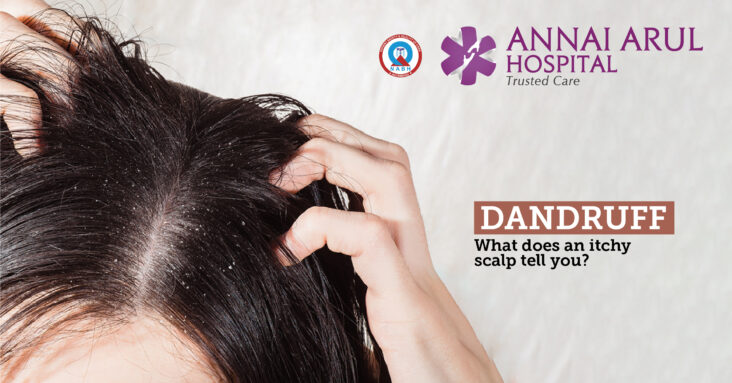
Dandruff: What does an itchy scalp tell you?

Dandruff: What does an itchy scalp tell you?

Dandruff usually declares itself with the appearance of flakes. At the same time, itching will be present. So, does a scratchy scalp try to tell you something more? Let us see what does it indicate and how to treat it.

Symptoms of dandruff

Dandruff symptoms include flakes and   an itchy scaly scalp. The flakes are white and oily which accumulate in the hair and fall on to the shoulders when you comb your hair or move the hair. The symptoms get worse in winter months, especially when the air is dry.

The symptoms may occur due to various reasons including irritated and oily skin, not shampooing the hair for long causing the skin cells to accumulate and create flakes, due to the presence of yeast called malassezia that causes excess skin cell growth or due to the use of unsuitable personal care products which may cause dermatitis that make the scalp red and itchy.

Surprisingly, men are more prone to dandruff than women. People who more oil in the hair or those suffering from certain diseases are at higher risk. Symptoms also occur more frequently during puberty, but dandruff can develop at any age.

Steps to prevent scaly and itchy scalp

Check on your shampoo

Itchy scalp may be able to get some relief by using an OTC shampoo that are advertised as formulated to help control dandruff. But getting the right one may take some trial and error. If you are not sure, ask your doctor for a suggestion. You may need to use a special shampoo or medicated shampoo to match your hair and get your dandruff under control.

Moisturize

You know that a dry scalp always has a tendency to flake and itch, but usually, the flakes with dry skin are smaller and less oily. Once you restore moisture to the scalp, it can decrease the itchiness. For moisturizing, you may use coconut oil which also has antibacterial properties, making it the right natural choice for fighting dryness.

Maintain good hygiene

Regular shampooing can keep oils at bay, helping treat dandruff symptoms. You can also resist the urge to scratch your scalp. The itchiness is mainly caused due to the irritation from dandruff, but scratching will only lead to an increase in irritation.


Tackle your stress and relax

Stress is seen to scale up the dandruff attack in some individuals. Malassezia may not occur due to scalp, but it can thrive when your immune system is weak due to stress.  You can relax, take a restorative walk or practice yoga and find an escape from stressful events to prevent dandruff.

Consult your doctor

The best thing is that dandruff is one condition which can be effectively treated with OTC shampoos and certain lifestyle measures. When in doubt or when you are not able to control the flakes and itichiness, go ahead and meet your doctor. Your doctor will examine thoroughly and prescribe the right shampoo and medications.

================================================================

Read More