

Share on                    

Opening Hours : 24 x 7
  Contact : Emergency: +91 8939 59 9999

All posts by admin

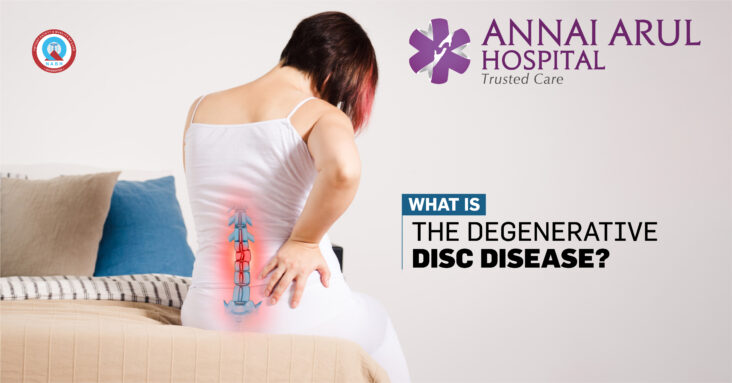
WHAT IS THE DEGENERATIVE DISC DISEASE?

WHAT IS THE DEGENERATIVE DISC DISEASE?

This is an age related condition when the vertebral disc between two adjacent vertebra (Spinal bone) undergoes wear & tear leading to back pain or lower limb pain

What causes the Pain ?

The vertebral disc acts as a shock absorber for the spinal column. It also increase the flexibility of the spine. Once the disc loses its structural integrity the disc bulges causing compression on nerve root leading to pain in the back or the lower limb. In severe cases it may lead to numbness and loss of function. In long standing cases the disc space narrows putting stress on the facet joint (Joint between adjacent vertebrae) leading to wear& tear of the facet joint thus causing pain & decrease flexibility.

2. Symptoms of disc degeneration are:

• Pain in the low back with or without radiation to lower limb
• Numbness of the lower limb with or without loss of muscle strength
• Decrease flexibility of spine with or without deformity
• Bowel & Bladder control issues
• If the degeneration is in the neck the pain & numbness or loss of function is in the upper limb.
• Gait Problems with symptoms like unable to grip slipper or feeling of walking on cotton

3. How is degenerate disc diagnosed?

• Clinical Examination done to determine the neurological loss and site of pain.
• Radiological Examination done to confirm the level of involvement.
• X-Ray gives an idea of the bone changes MRI gives a clear picture with regards to disc and nerve root compression,
• Other special investigation like contrast CT may he suggested under special circumstances.

4. What is the treatment?

• Treatment for degenerative disc disease include physical therapy, exercise , medication, losing weight and if required, surgery. Apart from medicines and physiotherapy.
• Medications include pain relief medicines, short term steroids and muscle relaxers.
• Physiotherapist use physiotherapy in form of (IFT) Interfertial therapy in relieving pain. Physio will also advise posture and exercise.
• Apart from medications and physiotherapy, minimal invasiver procedures like injections of steroids / local anesthesia may be advised for therapeutic / diagnostic intervention respectively .
• If not amenable to above management surgery may be advised by doctor for pain relief
• Surgical Management is also indicated as first line of management when there is loss of function.
• Early diagnosis & Management in the above scenario gives better outcome , consult your doctor for the same.
Read More

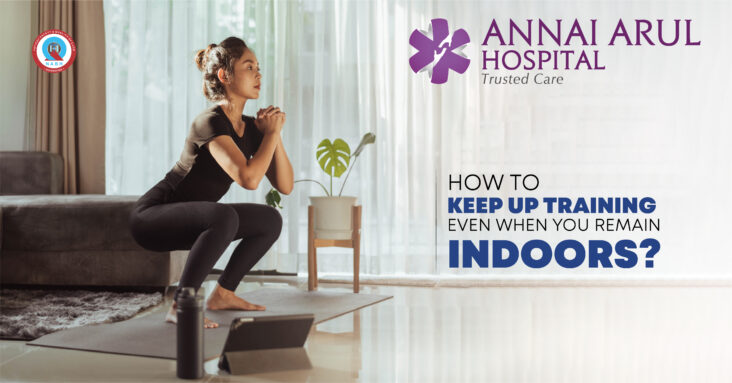
HOW TO KEEP UP TRAINING EVEN WHEN YOU REMAIN INDOORS?

HOW TO KEEP UP TRAINING EVEN WHEN YOU REMAIN INDOORS?

In the present pandemic situation, many prefer to continue their training indoors. Even a bad weather day like a rainy day is a perfect opportunity for cross-training indoors.

Cross-training indoors is the key to performance improvement and injury prevention. If you concentrate on running alone, then you may miss the adjustments required to make to stay healthy.

The three components that get involved in cross-training include cardio, strength and agility.

Cardio

It is recommended that at least 150 minutes of moderate-intensity exercise is required per week for optimum cardio vitality. Runners, on the other hand, may require up to 300 minutes of moderate-intensity exercise. All these will go to train our heart and lungs and keep them healthy.

If you have a treadmill, elliptical bike or similar equipment, you can do your exercise or else you have to choose an equipment-free cardio regime.

You may very easily create your own indoor circuit training, which consists of running, walking and marching. You can practice running in place, stair climbing, jumping jacks or jumping rope.

There is the option of choosing high-intensity training (HIT), which is nothing but seven to eight minutes of intense exercise. Spread it between normal exercise and elliptical. Dancing is another option and nothing like a fast-paced Zumba number. All these will get your heart up and running smoothly.

Strength

Suppose you don’t have too much space to spare for exercise; there’s plenty you can do with your control of body weight and strength exercises.

The strength exercises should focus on a lot of major muscle groups. Try to have a series of six to ten exercises with an average of ten repetitions. You can exercise to a point where at the end of the exercise, your muscle gets deeply tired. Remember not to hurt yourself in the process.

Agility

Last is the agility factor or exercises. Focusing on agility will improve our ability to prevent injuries. There are many options available, including yoga, pilates and barre. You can use the cool-down period of stretches and have the most beneficial agility training.

Finding other resources

You can always access the online training. You can also watch an experienced runner who is a part of a running club. Such experienced trainers and sportspeople will be able to guide you easily as to what is appropriate for your age and ability.

———————————————————————————————————

Read More